
Finding Peace Just Where You Are: 3 Steps to Get You There
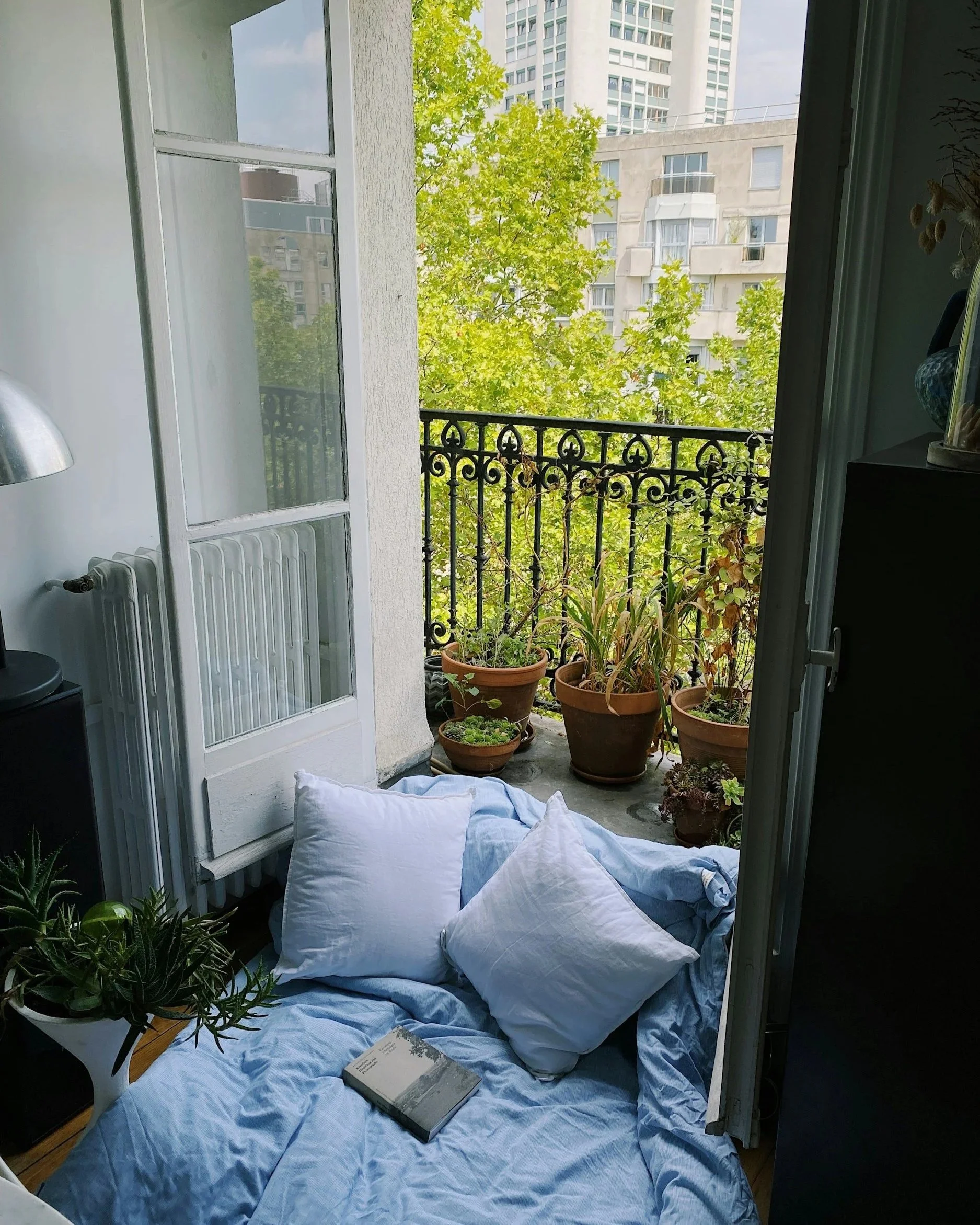
One of the most challenging things to do—especially in a world that glorifies speed, productivity, and control—is to feel at peace exactly where you are.
Not when things improve.
Not when you finally have clarity.
Not when life looks the way you imagined.
But now.
If you’re honest, there’s likely a part of you that’s waiting. Waiting for resolution, for certainty, for something to shift so you can finally exhale. That’s why I created this piece—as a deeper, more grounded invitation to pause, reflect, and explore what it means to access peace without requiring your circumstances to change first.
Because you’re not alone in this tension. And more importantly—there is another way to meet it.
Why This Matters
There’s something powerful that happens when we witness someone else’s experience. Whether it’s through a conversation, a film, or a story, we begin to recognize pieces of ourselves reflected back.
As someone who has had thousands of stories shared with me in confidentiality, I’ve had the privilege of holding space for people navigating uncertainty, transition, and emotional pain. And what I’ve seen, over and over again, is this:
Peace doesn’t arrive when life becomes perfect.
It begins in the moment we relate differently to where we are.
And yet, many people feel stuck when they hear phrases like, “Just be grateful” or “Be present.” Not because they’re unwilling—but because they genuinely don’t know how.
The question I hear most often is simple, but profound:
“How do I actually feel at peace when my life still feels unresolved?”
The answer isn’t surface-level. It requires a shift in how you understand your experience—and how you meet yourself within it.
Step 1: Recognize the Deep Nature of the Question
When you ask, “How can I be at peace right now?” you’re not just asking for a coping strategy.
You’re asking about trust.
This is an existential question—one that touches something deeper than logic or circumstance. It asks:
Do you trust life, even when you don’t understand it?
Do you believe that things can unfold in your favor, even without immediate proof?
Can you soften your grip on control, just enough to let something else support you?
Whether you connect to the idea of God, the Universe, or simply the intelligence of life itself, this step is about shifting from resistance to openness.
Not blind optimism.
Not bypassing reality.
But a willingness to consider that you might be held—even here.
In my experience, both in sessions and in my own life, something subtle but powerful happens when we create space for this possibility. We stop fighting the moment, and in that softening, something begins to reorganize.
Not always visibly.
But meaningfully.
Step 2: Name the In-Between
Much of our discomfort comes from being in what I call the in-between.
That space where:
You’ve outgrown something, but don’t yet know what’s next
You’ve let go, but haven’t received
You feel change happening internally, but can’t fully articulate it
This space can feel disorienting because it doesn’t offer clear answers. And without awareness, the mind rushes in to fill the gap—with worry, comparison, or urgency.
We start asking:
Am I behind?
Am I doing something wrong?
Why isn’t this clearer yet?
But what if the lack of clarity isn’t a problem?
What if it’s part of the process?
Naming the in-between is powerful because it interrupts the narrative that something is wrong. It allows you to say, honestly:
“I’m in a transition. And it’s okay that it doesn’t feel complete yet.”
From there, the focus shifts from forcing answers to creating support.
This is where simple, grounding practices can help:
Writing your thoughts without trying to solve them
Taking slow walks without a destination
Creating moments of stillness without needing productivity
These aren’t solutions. They’re stabilizers.
They help you stay connected to yourself while life is still unfolding.
Because the in-between isn’t empty—it’s where integration happens.
Step 3: Learn from the Growing Pains
When life feels repetitive or difficult, it’s easy to assume you’re stuck.
But often, what’s actually happening is that something is trying to be seen more clearly.
In psychology, we talk about patterns—recurring emotional or behavioral loops that continue until they’re consciously understood.
It might look like:
Choosing similar relationships that lead to the same outcome
Avoiding certain risks, then feeling unfulfilled
Distracting yourself when discomfort arises
Instead of asking, “How do I fix this?”, try asking:
What is this experience showing me about myself?
What belief or pattern keeps repeating here?
What would it look like to respond differently this time?
Growth isn’t always comfortable. In fact, it rarely is.
But there is a difference between pain that keeps you stuck and pain that moves you forward.
Peace often emerges not when everything is resolved—but when something finally makes sense.
A Story: When Life Catches You
I once worked with a woman—I’ll call her Laura—who carried a deep fear of instability rooted in earlier experiences of rejection and not belonging.
At one point in her life, everything seemed to unravel at once:
A housing issue escalated into legal conflict
She was unexpectedly asked to leave her temporary accommodation
She lost something important, reinforcing her sense of insecurity
It felt like confirmation of her deepest fear: “I’m not supported.”
And yet, alongside these challenges, something else was happening:
The right people showed up at the right time
Unexpected solutions appeared
Support came from places she hadn’t anticipated
From the outside, it was clear that two things were unfolding simultaneously:
Her old wound was being activated—so it could finally be addressed.
And life was responding—offering evidence that she wasn’t as alone as she believed.
That’s often how it works.
Not in a perfect, linear way—but in a layered one.
What If You Leaned In?
What if this moment in your life—however uncertain or unfinished it feels—isn’t something to escape?
What if it’s something to experience more fully?
When the voice in your mind pushes for answers, and your body feels tense or unsure, consider a different response:
Pause. Notice. Stay.
There may be something forming that you can’t yet see.
Something that doesn’t respond to pressure—but does respond to presence.
Your Reminder:
You are not behind.
You are not broken.
You are not failing at life.
You are in a moment that is still unfolding.
And while it may not feel comfortable, it is not meaningless.
Think about how you wait for something you trust will arrive—you don’t question its existence every second. There is a quiet certainty, even in the waiting.
Peace can begin in that same space.
Not because everything is resolved.
But because you are no longer resisting where you are.And sometimes, that’s enough to change everything.
You are not behind.
You are not broken.
You are not failing at life.
You are in a moment that is still unfolding.
And while it may not feel comfortable, it is not meaningless.
Think about how you wait for something you trust will arrive—you don’t question its existence every second. There is a quiet certainty, even in the waiting.
Peace can begin in that same space.
Not because everything is resolved.
But because you are no longer resisting where you are.And sometimes, that’s enough to change everything.
You are not failing at life.
You are in a moment that is still unfolding.
And while it may not feel comfortable, it is not meaningless.
Think about how you wait for something you trust will arrive—you don’t question its existence every second. There is a quiet certainty, even in the waiting.
Peace can begin in that same space.
Not because everything is resolved.
But because you are no longer resisting where you are.And sometimes, that’s enough to change everything.
-Ati
